Ep. 18 | Capitale de Noël: Stepping into the Heart of Christmas in Strasbourg
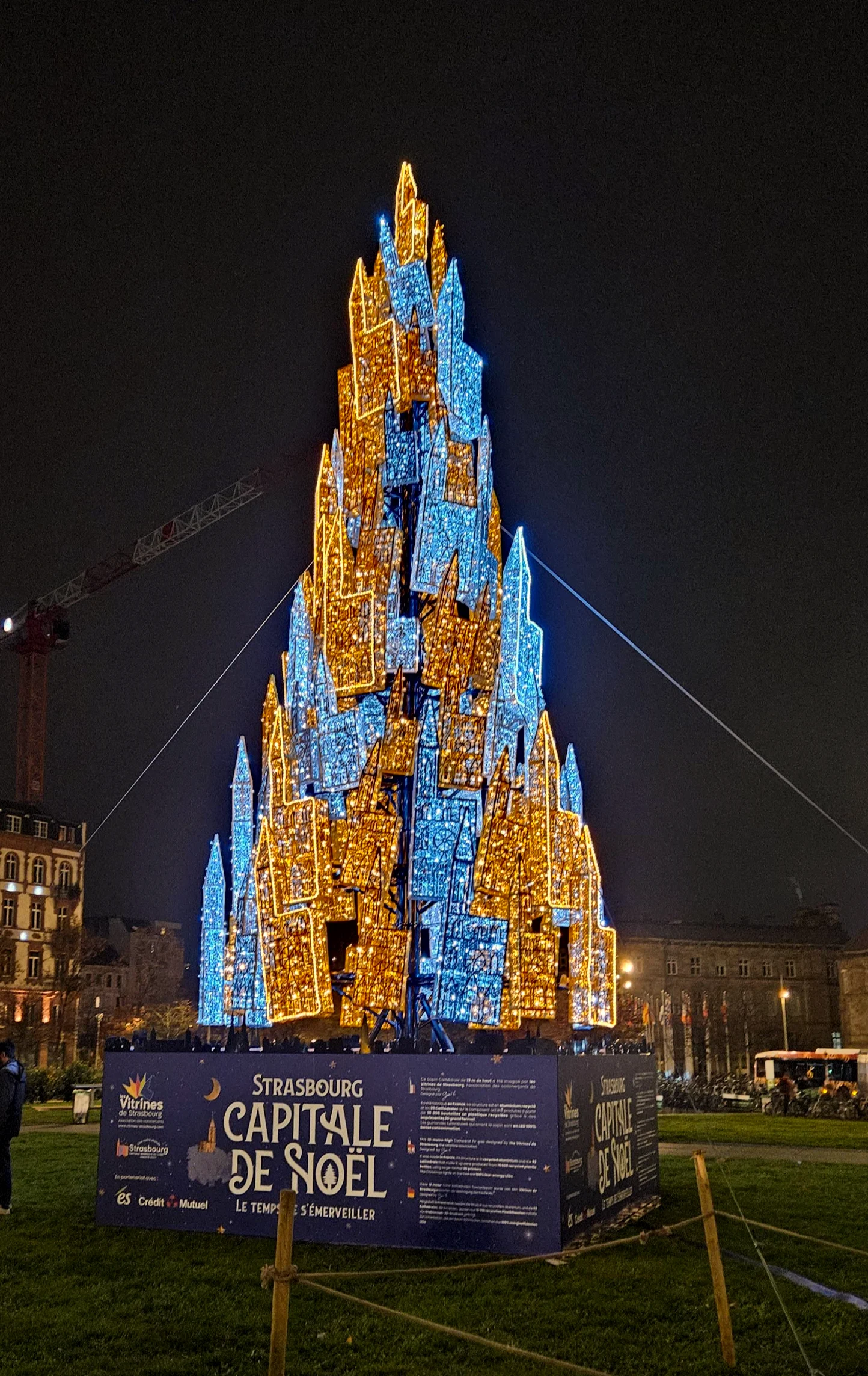
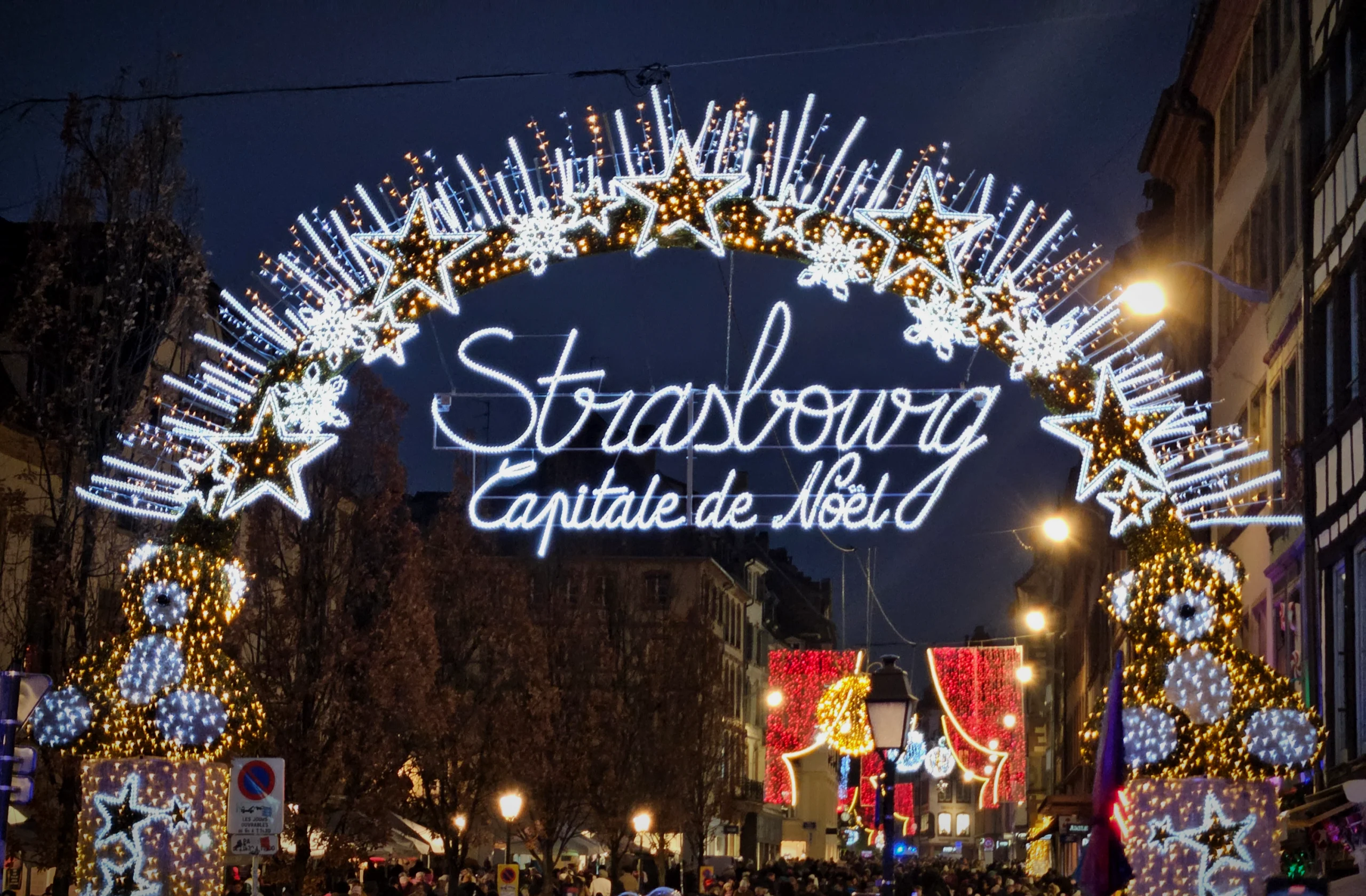
Capitale de Noël
Strasbourg does not claim to have invented the very first Christmas market—that honor traces back across the German border. Yet the region of Alsace-Lorraine has spent centuries shifting hands between France and Germany, cultivating a distinctive cultural crossroads where Germanic traditions seamlessly blend with French refinement.
Strasbourg’s market (Christkindelsmärik) dates back to 1570. Its enduring fame owes much to the city’s historic status: a bustling medieval trade nexus and one of the earliest cradles of European printing, where travelers, merchants, and ideas constantly converged.
Over five centuries, that legacy evolved into an undisputed title: Capitale de Noël—the Capital of Christmas.
Le Grand Sapin of Place Kléber
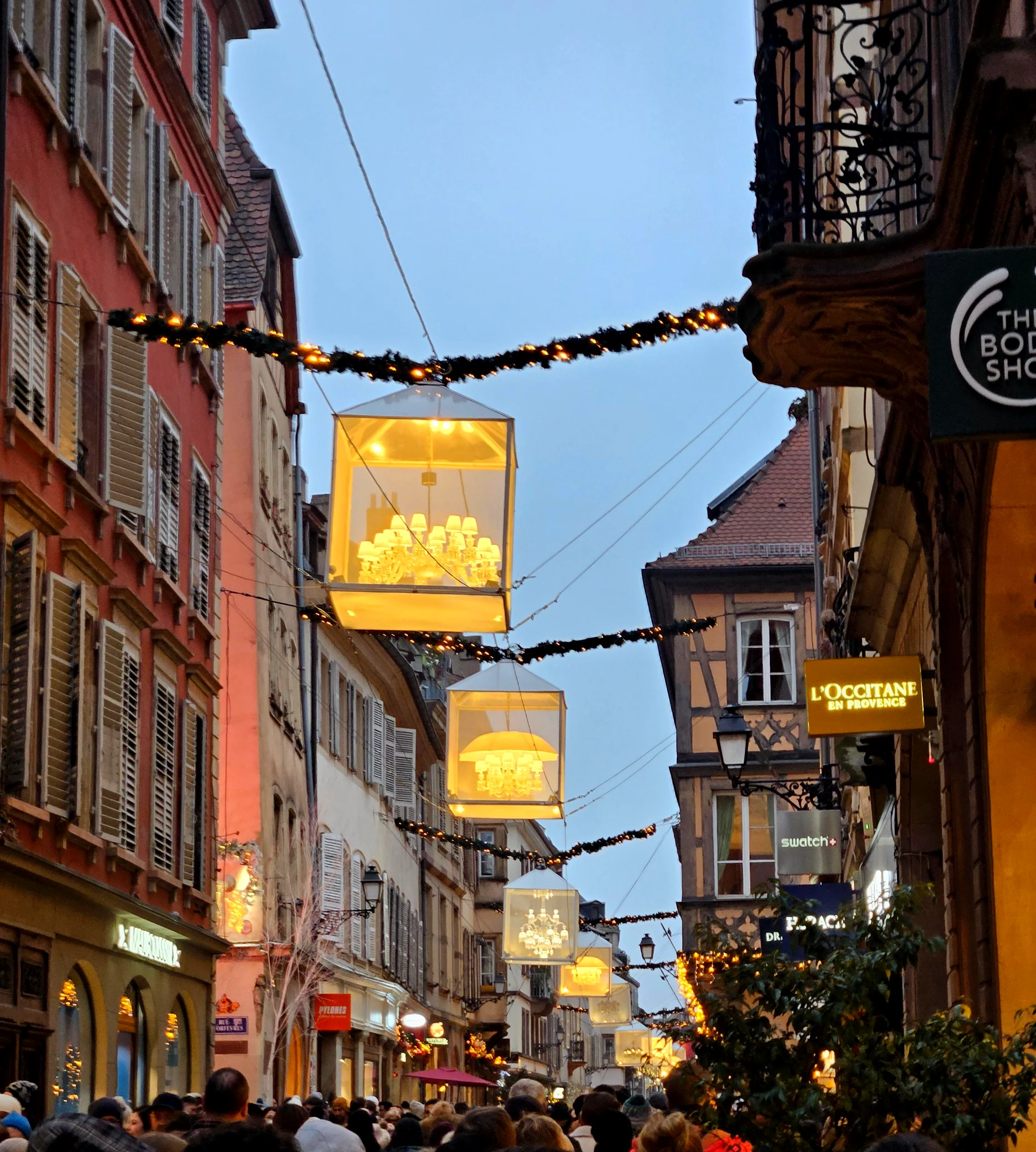
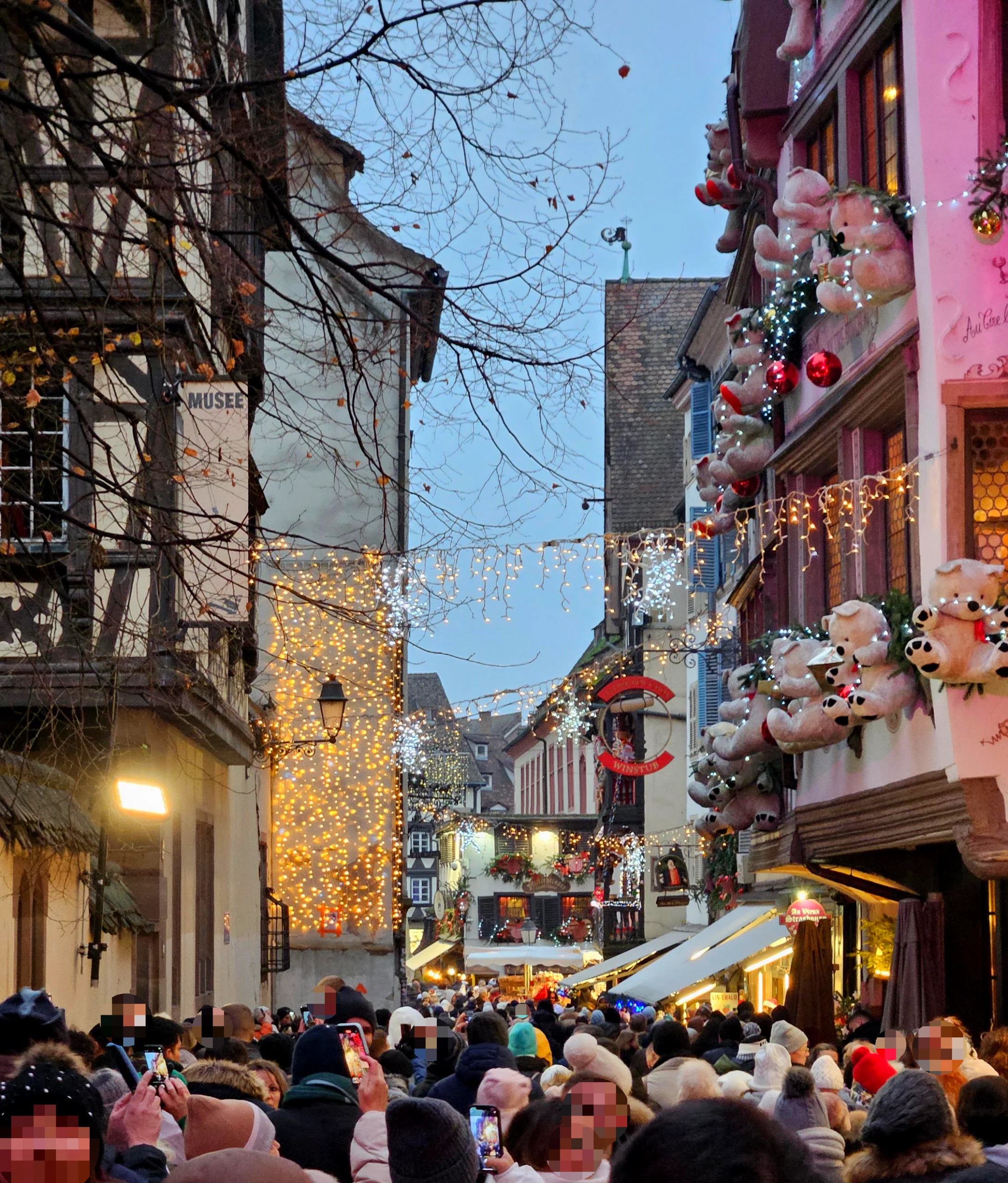
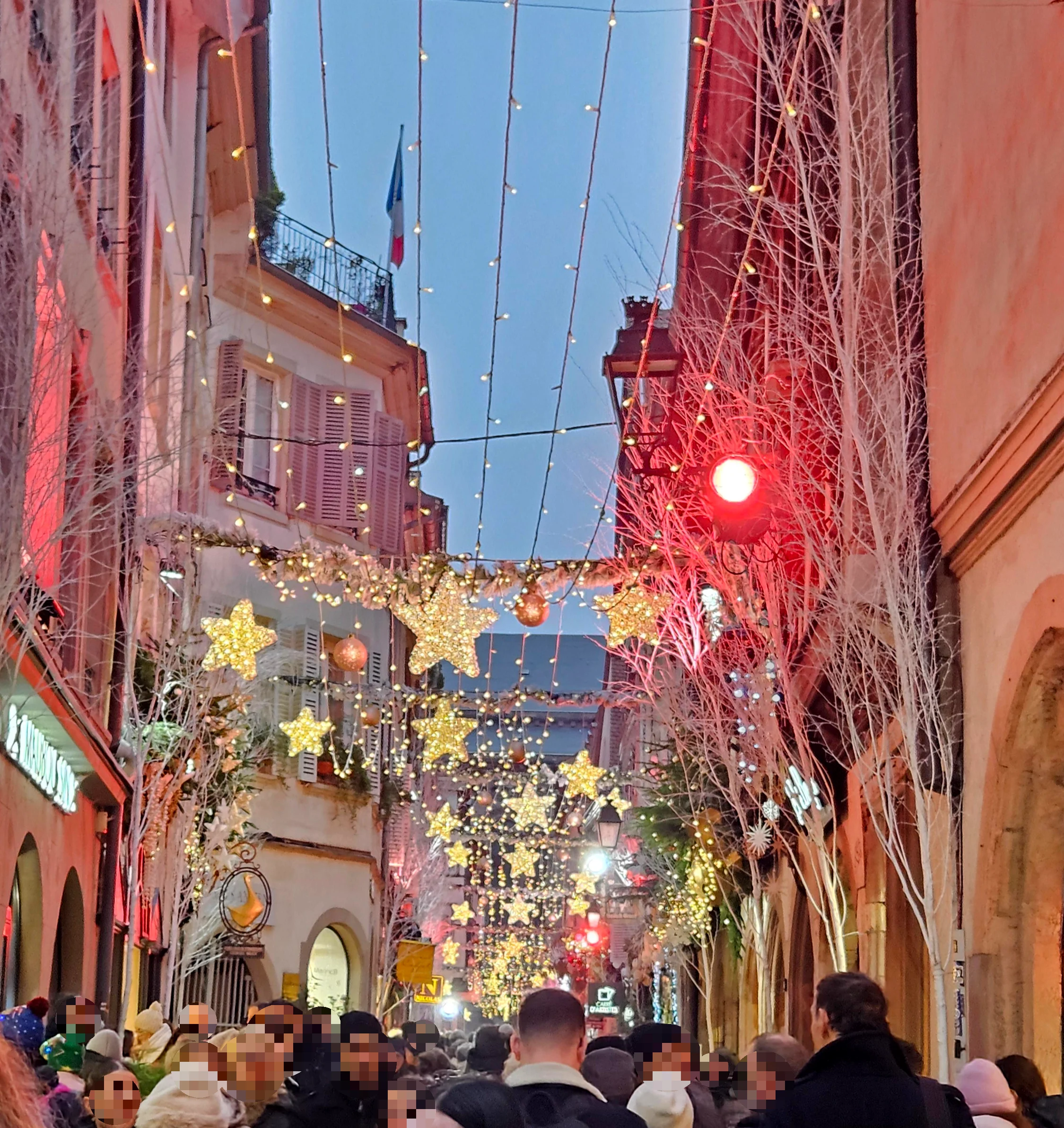
During the season, every corner of Strasbourg’s historic core is adorned with illuminated pine garlands and intricate holiday displays. Draped over medieval stone facades and exposed timber beams, these lights lend the city an unmistakably romantic air.
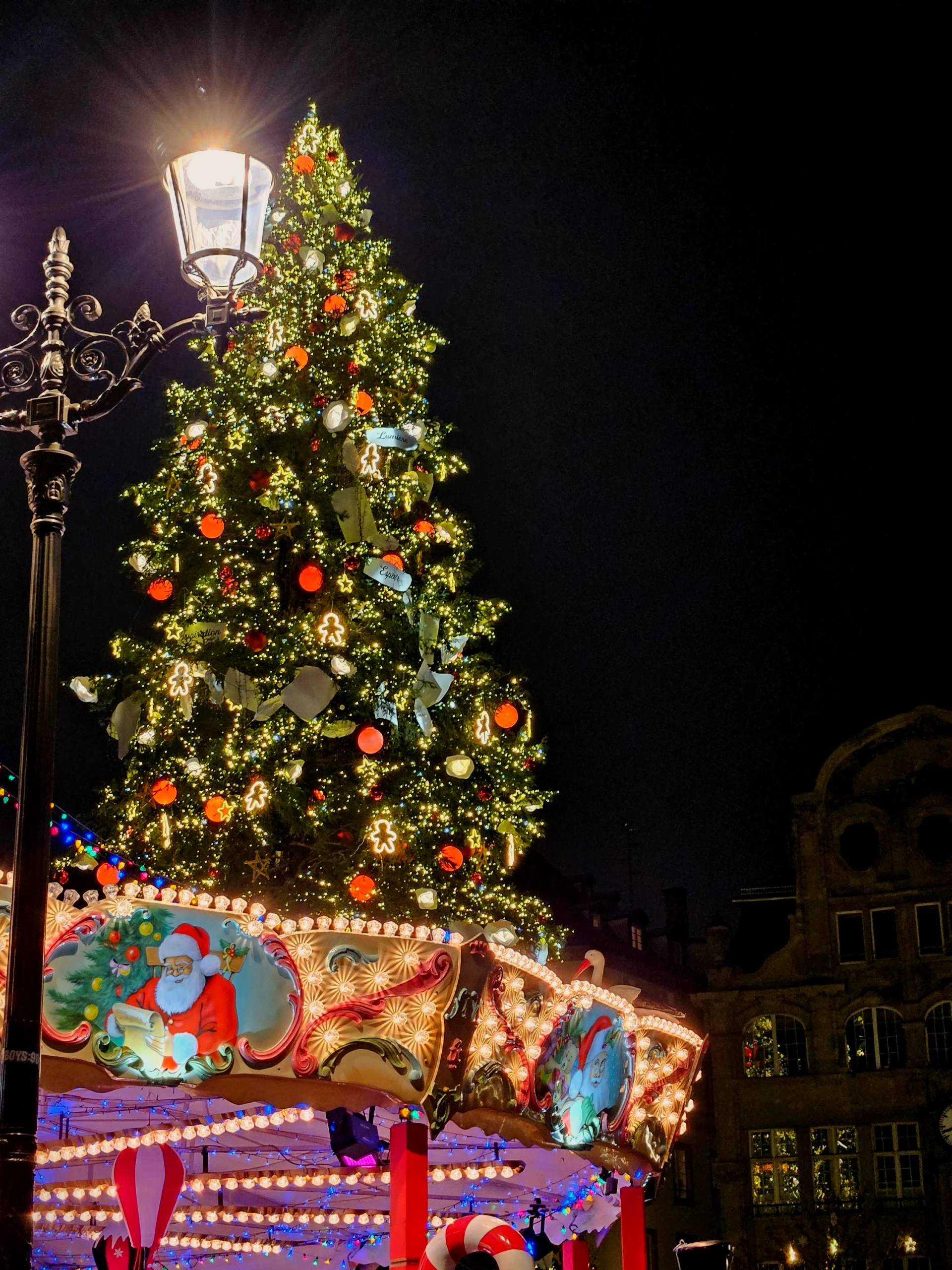
At the center of Place Kléber stands the crown jewel of the market: Le Grand Sapin, a natural fir tree soaring over thirty meters high.
Even in broad daylight, its sheer scale commands the entire square. But once dusk settles, thousands of ornaments and twinkling fairy lights erupt in color, casting a golden glow visible from across the plaza. Flanked by an antique double-decker carousel and a sea of timber chalets, the tree captures every classic image we associate with Christmas.
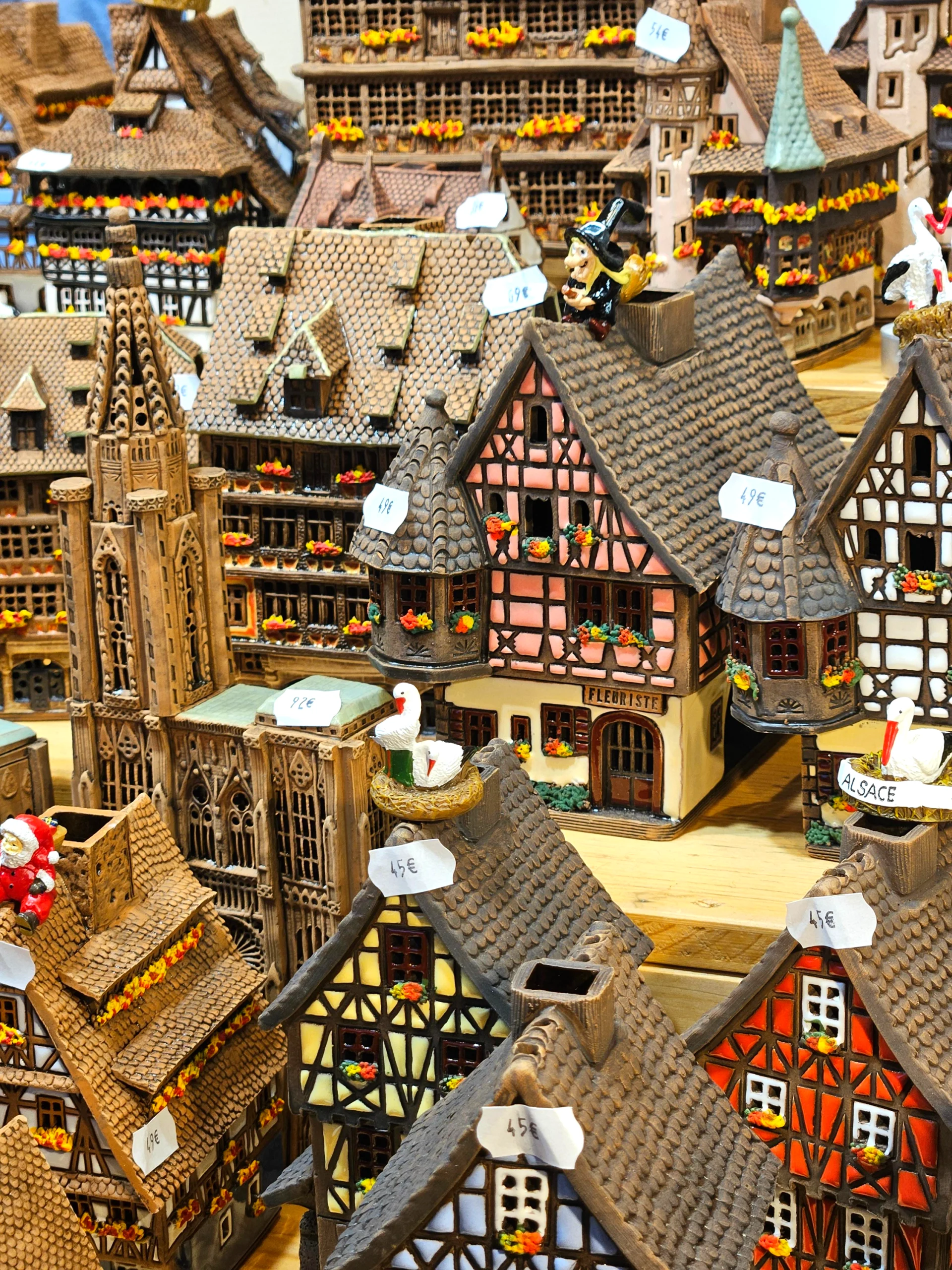
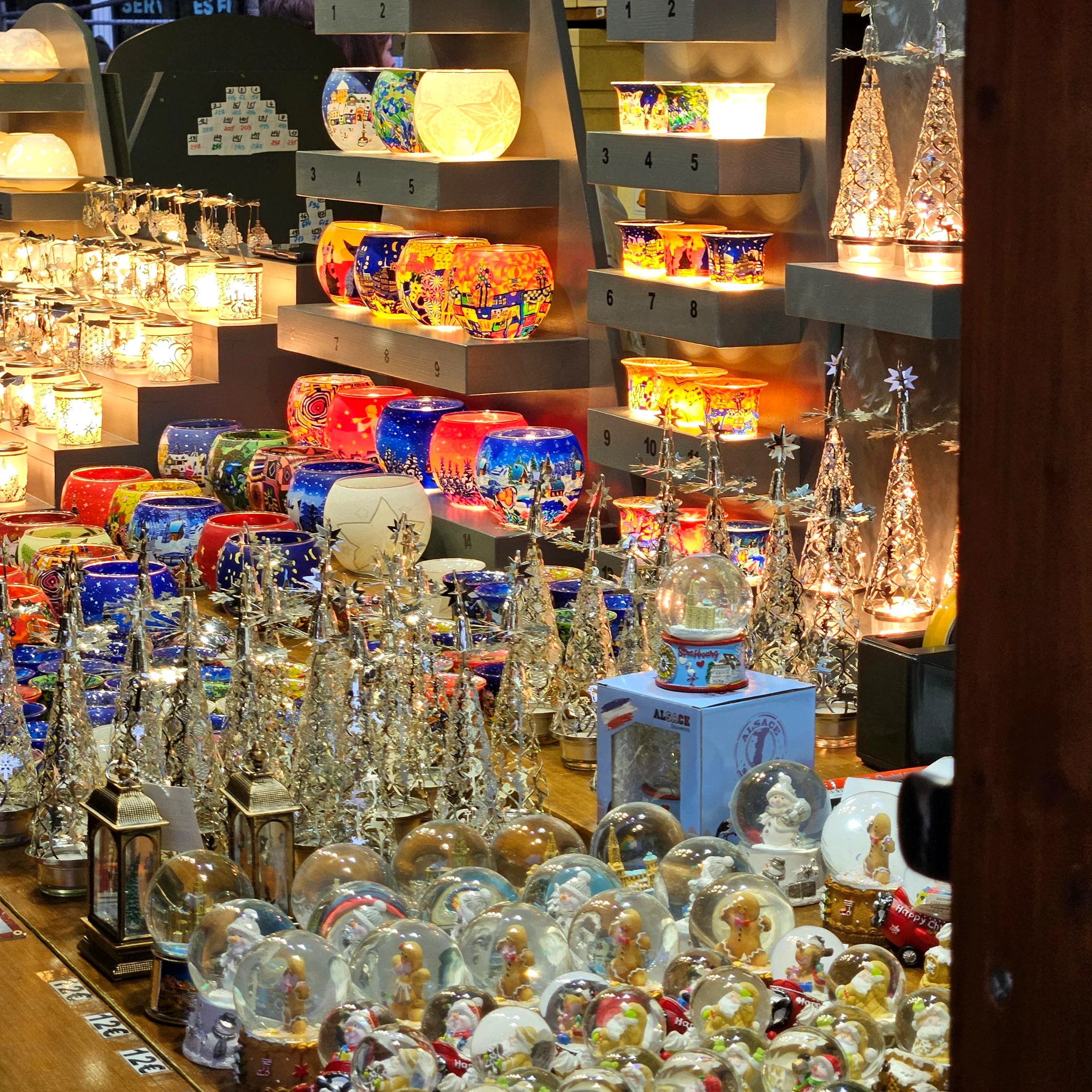
The square is dense with wooden stalls offering local cuisine and artisan wares. Compared to the markets in Paris, the goods here carry a much stronger sense of regional terroir. Vendors sell hand-carved wooden figurines, delicate snow globes, and ceramic candle holders modeled after traditional Alsatian half-timbered houses.
I couldn’t resist picking up one of the miniature ceramic houses. Had my luggage allowance been more forgiving, my wallet would have been in serious trouble.
The Spire of Notre-Dame and Petite France
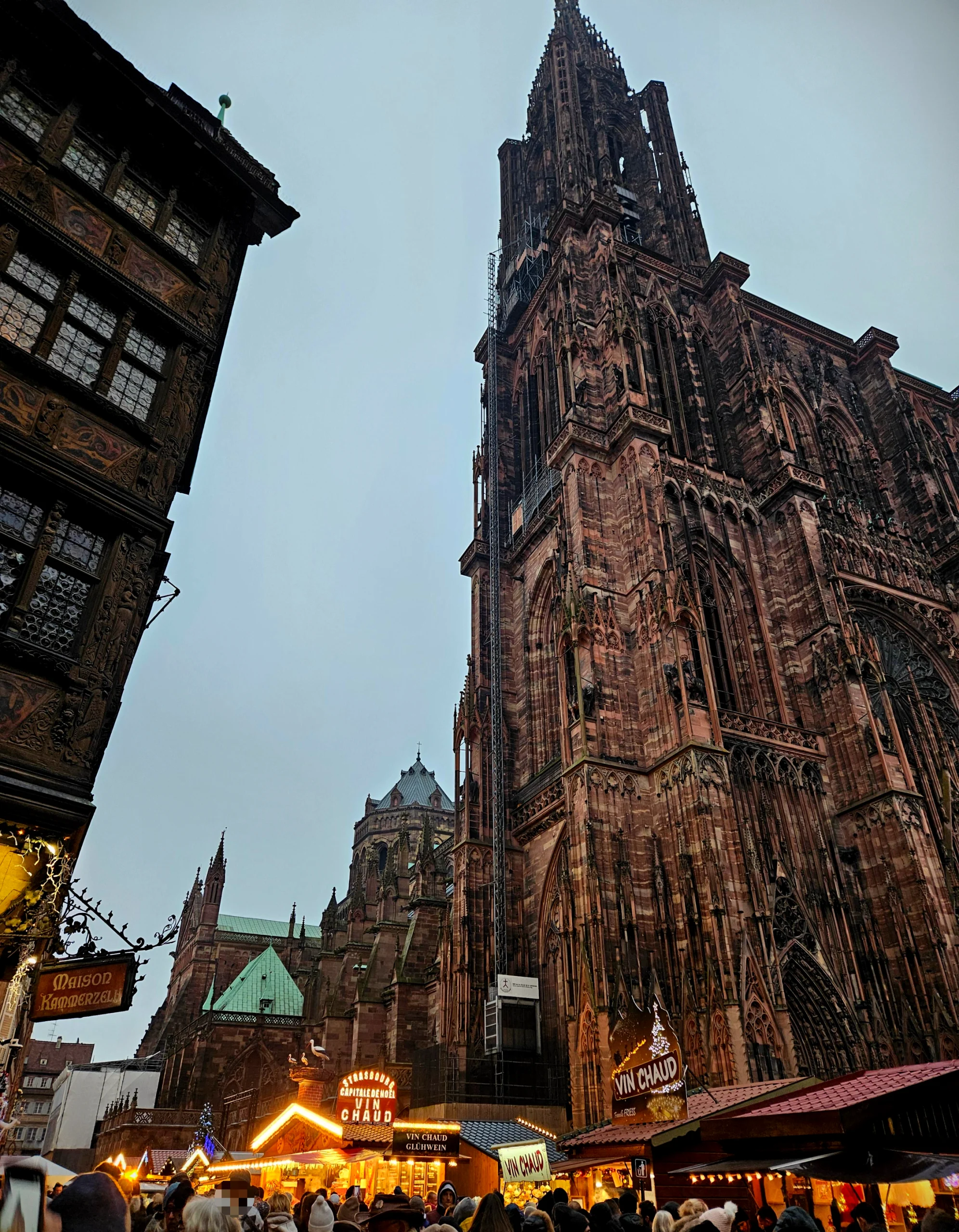
From Place Kléber, the pedestrian flow naturally carries you down narrow, garland-draped alleyways toward Strasbourg Cathedral (Cathédrale Notre-Dame de Strasbourg).
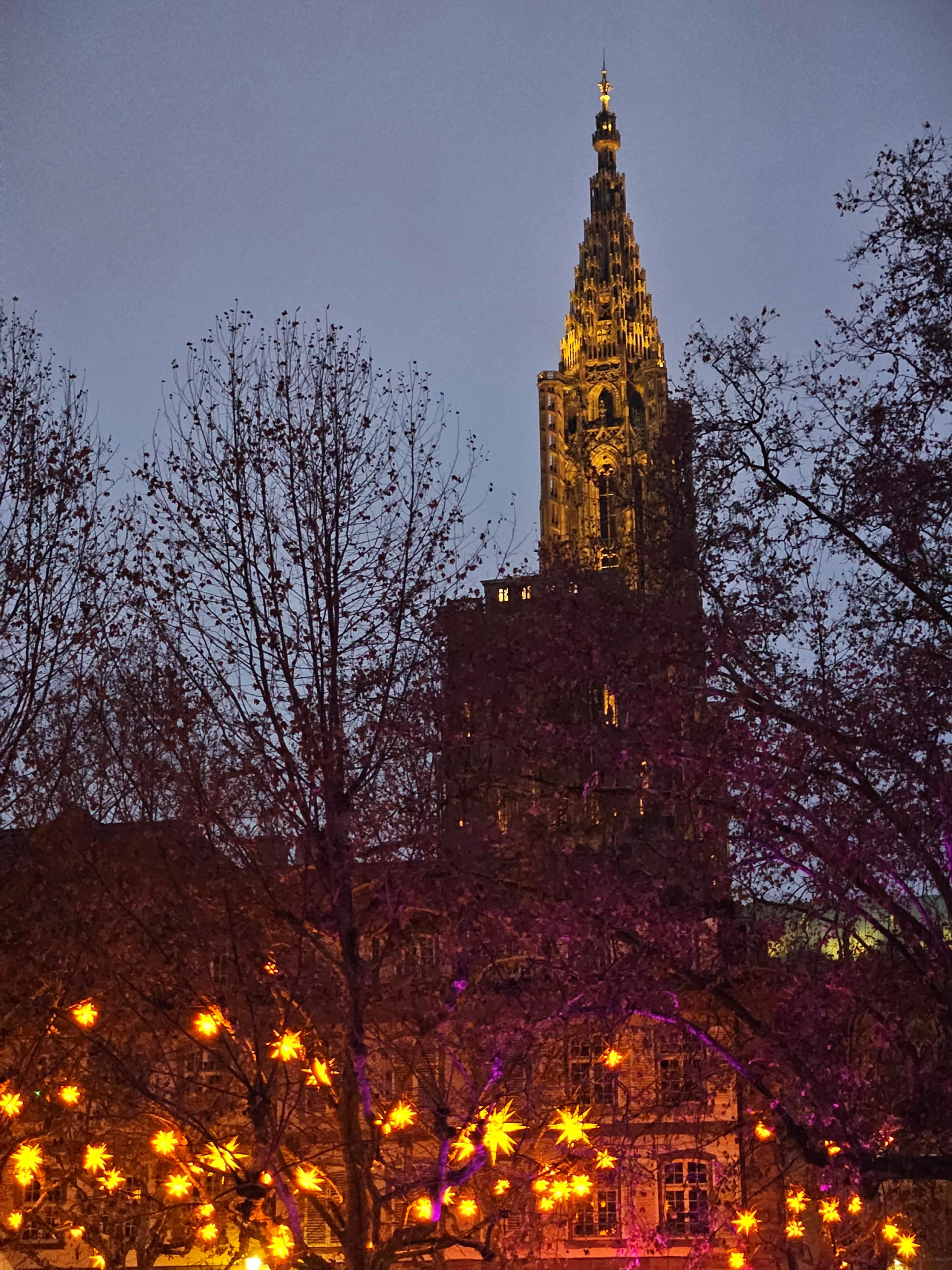
Rising abruptly above the low-slung historic quarter, the cathedral’s solitary Gothic spire is breathtaking. Built from pink Vosges sandstone, its intricate, lace-like stonework pierces the sky with absolute architectural authority. At its base sits another lively cluster of chalets, where stopping for a hot mug of vin chaud is the perfect antidote to the winter breeze.
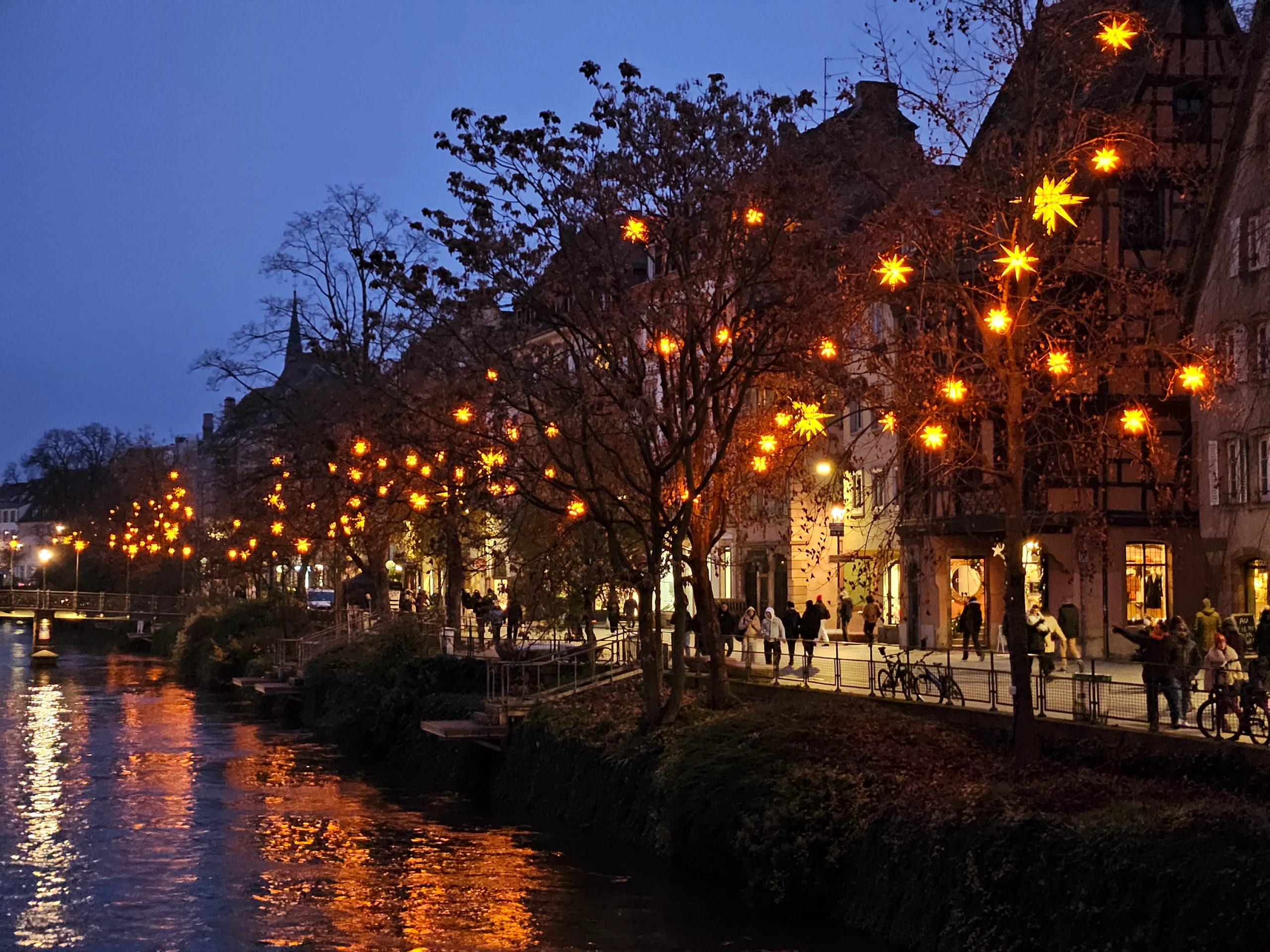
Continuing past the cathedral brings you to Petite France, the historic quarter where the River Ill branches into gentle canals.
Here, historic Fachwerk (half-timbered) buildings lean over the water, their dark timber frames accentuated by strings of glowing orange Moravian stars hanging from riverside trees. The reflection of these warm stars shimmering across the dark water creates a quiet, storybook beauty distinct from the lively bustle of the main squares.
The Quintessence of the Holiday Market
Visiting Strasbourg in December means navigating dense, shoulder-to-shoulder crowds drawn from across the globe. Yet the sheer historical weight and beauty of the city never feel overwhelmed by the volume of visitors.
If Christmas were an actual physical geography rather than a date on the calendar, it would almost certainly be the Grande Île of Strasbourg.
The half-timbered architecture reflecting centuries of Franco-German heritage, the towering presence of the Gothic cathedral, local comforts like sizzling tarte flambée and choucroute, and genuine regional craftsmanship—all come together to prove that the title Capitale de Noël is no marketing exaggeration.
No matter what holiday markets I visit in the future, the glowing streets of Strasbourg will forever remain the benchmark.