Ep. 04 | The Spirit of Lapland: The Sámi, the Fire Fox, and a Stuck Snowmobile
The Indigenous People of Lapland: The Sámi
Living across Saariselkä and the broader Arctic north are the Sámi, the indigenous people of this frozen expanse. In their own language, their ancestral homeland is called Sápmi—a cultural territory that predates modern nation-states, stretching far beyond Finnish Lapland across northern Norway, Sweden, and Russia’s Kola Peninsula. While Finnish Lapland is home to a significant part of their population, their heritage belongs to this entire borderless Arctic landscape.
At first glance, Lapland looks like a remote, frozen expanse so unforgiving that one might wonder who could have ever fought over it. Yet throughout modern history, this region has witnessed its share of conflict and geopolitical turbulence. As national borders were drawn and redrawn, the Sámi—who had lived freely as nomadic reindeer herders for centuries—found their traditional migration routes cut off. On the Kola Peninsula, forced relocations further fractured their way of life.
With Finnish Lapland holding a large Sámi community, encountering their culture in Saariselkä is an everyday part of the journey. In the winter months, many locals work in Arctic tourism. In fact, most of the guides leading wilderness safaris and winter activities are Sámi. Spending time out on the snow gave me the chance to talk with them and hear their stories firsthand.
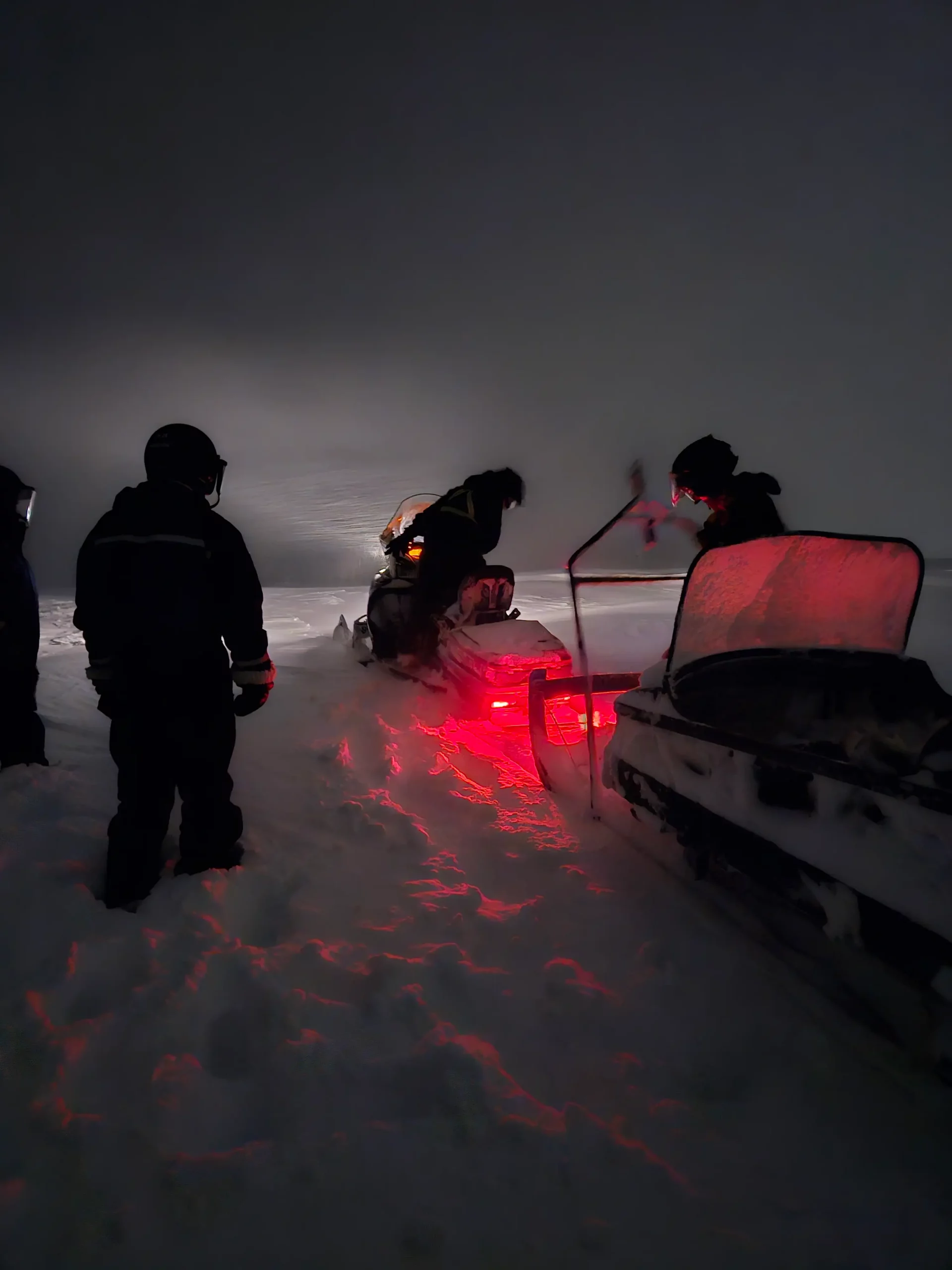
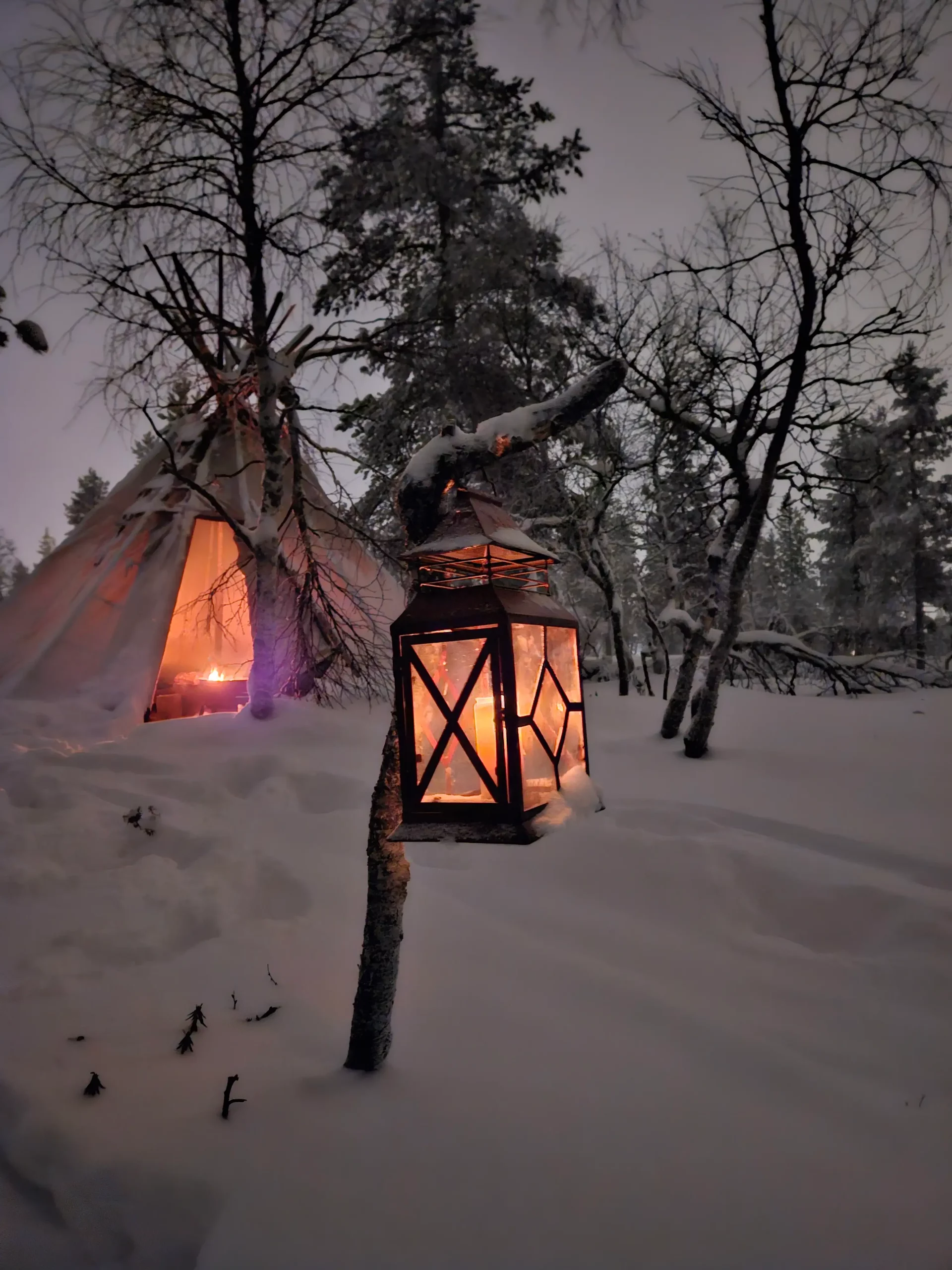
One of the excursions I booked was an Aurora Campfire Safari. The premise was simple: ride in a large wooden sled pulled by a snowmobile deep into the forest, warm up by an open fire inside a traditional Sámi goahti (timber hut) with hot berry tea, and return under the Arctic night sky.
The adventure came with an unexpected twist. Every time our snowmobile encountered even a slight uphill slope, its tracks lost traction in the loose snow, spinning out helplessly. As a result, four of us in the sled had to hop off into the deep powder and push from behind—not once, but two or three times.
In snowy Arctic regions, dedicated winter trails are maintained for snowmobiles and cross-country skiers, and tracks rarely spin out once these paths are properly packed. Our Sámi guide explained what was happening: winter had arrived unusually late this year, and snowfall had been surprisingly light so far. Because fewer riders had traveled the trails yet, the snow beneath us hadn’t compacted into a firm base, leaving the heavy machines to sink.
To a visitor visiting the Arctic once in a lifetime, looking out over endless white landscapes and hearing that “it hasn’t snowed enough” sounded almost surreal. But to the Sámi, whose lives have been intertwined with snow for generations, the changing rhythm of the seasons is impossible to ignore.
Living in Texas, I’ve noticed our own weather growing increasingly erratic. In the middle of winter, temperatures can soar past 80°F (close to 30°C) one afternoon, only to plunge below freezing two days later, accompanied by uncharacteristic downpours. If someone living in a city can feel these environmental shifts, how much more profound must climate change feel to people whose very traditions depend on the timing of Arctic ice and snow?
45 Kilometers from the Russian Border
If you examine a map of the Inari region closely, one geographic detail stands out: its proximity to Russia. Roughly 45 kilometers (28 miles) east of Saariselkä lies the Finnish-Russian border.
Finland and Russia. Two countries with vastly different modern identities share an intertwined, complex history across this long frontier. With the war in Ukraine ongoing, being less than 50 kilometers away from an active warring nation stirred an oddly unsettling feeling.
The conflict has also placed an emotional strain on the Sámi community itself, severing ties between Sámi families living in the Nordic countries and those across the Russian border. We often read about how colonial powers carved arbitrary borders across Africa, leaving deep historical scars that persist today. Realizing that a similar kind of division quietly exists right here in modern Northern Europe was a sobering thought.
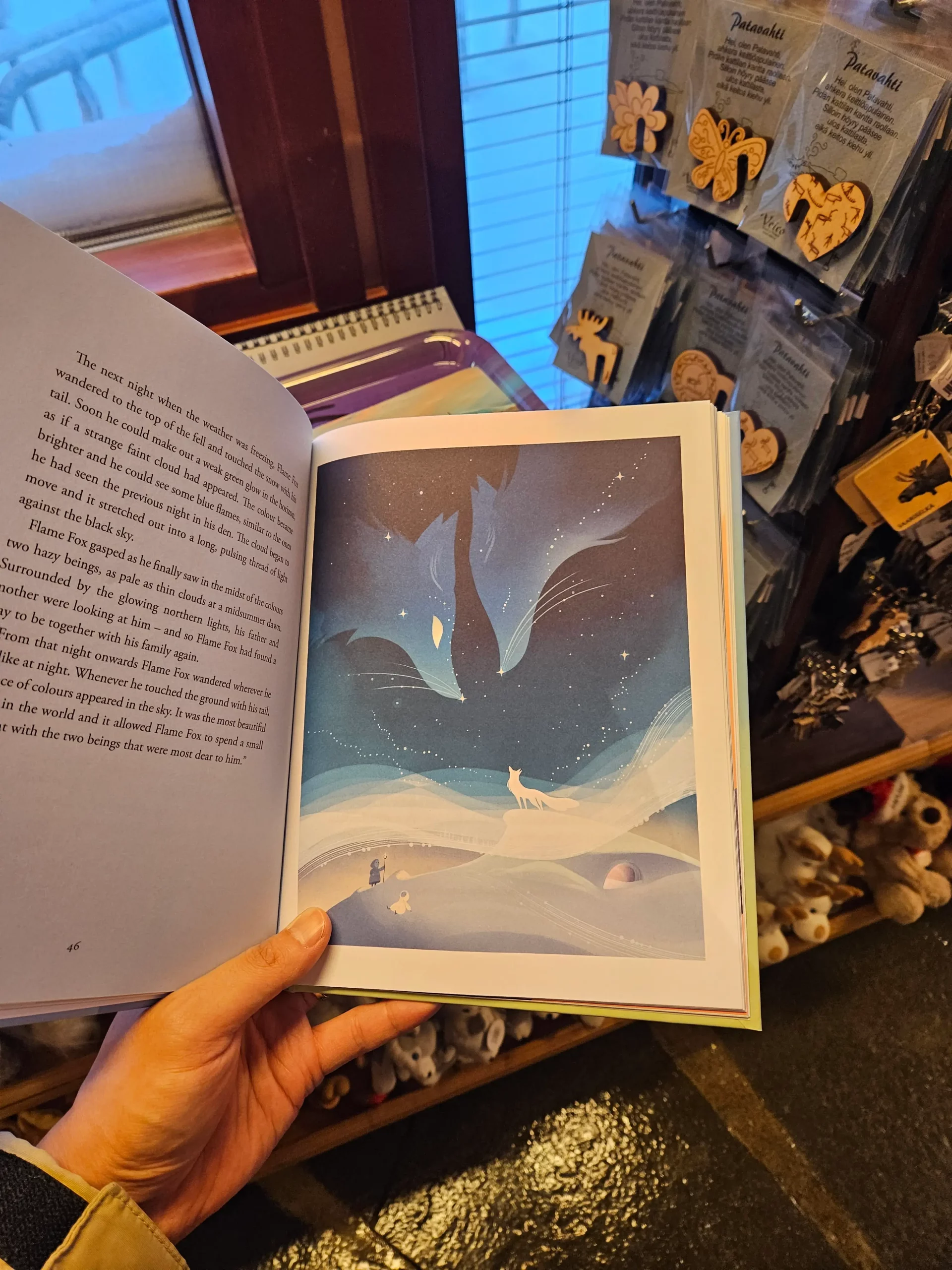
The Fire Fox of the Arctic
In a region defined by the northern lights, the aurora is naturally woven into the very fabric of Sámi lore. Finland is rich with ancient folklore surrounding the lights, and our guide shared the most famous one—the legend of the Fire Fox.
The Finnish word for the Northern Lights is Revontulet, which translates literally to “Fox Fires.” In ancient Finnish and Sámi mythology, it was believed that a mythical creature known as the Fire Fox created the auroras. As the beast sprinted across the snow-capped fells, its tail swept against the snowy hillsides, sending clouds of fine ice crystals into the night air that caught the moonlight and sparkled across the sky.
Like all ancient legends, variations exist. Another version tells of the fox running so fast that its tail brushed against the rocky ground, generating sparks that flew up into the heavens to ignite the night sky. The first version, with the swirling snow, feels especially fitting since it naturally ties the phenomenon to winter.
No matter the variation, the Fire Fox remains the central figure. To the Sámi, it was considered a sacred and auspicious being; catching one was said to bring immense fortune, while the glowing lights it left behind were revered as spiritual fires. Browsing the gift shop near the summit of Mount Kaunispää, I came across illustrated storybooks retelling this very tale. In Lapland, the Fire Fox and the auroras are far more than just a fairy tale—they are an enduring piece of Arctic heritage.