
Ep. 15 | The Gastronomic Baseline: Foie Gras, Petrossian Caviar, and Bordier Butter in Paris
The Capital of Gastronomy
Paris is one of the rare cities where extraordinary, world-class ingredients are woven directly into everyday life. They don’t come cheap, of course, but in a nation where food is elevated to high culture, exceptional raw produce naturally converges in abundance.
Comparing this to the United States highlights a stark contrast. In a metropolis like New York, where vast culinary capital and dense wealth meet, sourcing rare international ingredients is relatively straightforward. Down in Texas where I live, however, there are many specialty delicacies that are simply impossible—or prohibitively expensive—to find. Recently, I spent weeks trying to source Carabineros (Spanish scarlet prawns), only to realize how difficult and costly that endeavor is here.
Gastronomy is a subtle, intricate universe. If you don’t continually push yourself to sample unfamiliar flavors, your culinary worldview shrinks. Being in Paris was the perfect excuse to step out of my comfort zone and taste ingredients I rarely encounter back home.
The Lesson from a Local Olive Mill
I first realized the importance of experiencing genuine, high-grade ingredients at a local olive oil mill.
Before that visit, I assumed all “Extra Virgin” olive oils were essentially interchangeable. Whenever I went to the supermarket, I’d casually grab the second or third cheapest bottle on the lower shelf.
That changed during an educational tasting seminar at the mill. I learned the most fundamental sensory tell of truly fresh, polyphenol-rich oil: that distinctive, peppery catch in the back of the throat. I saw how drastically flavor profiles pivot across single-varietal olives, and discovered just how loose the labeling regulations around “Extra Virgin” can be in the US market.
Returning home and tasting my budget supermarket oil with that new baseline, it suddenly made complete sense why it lived on the bottom shelf.
From that moment on, I began investing in high-quality olive oil. The dishes I cooked with it immediately tasted richer and more vibrant. Once a narrow door into an ingredient’s true potential opens, an entirely new gastronomic landscape reveals itself. It sparked an appetite to explore the higher tiers of ingredients I had previously taken for granted.
Tasting Foie Gras on the Seine
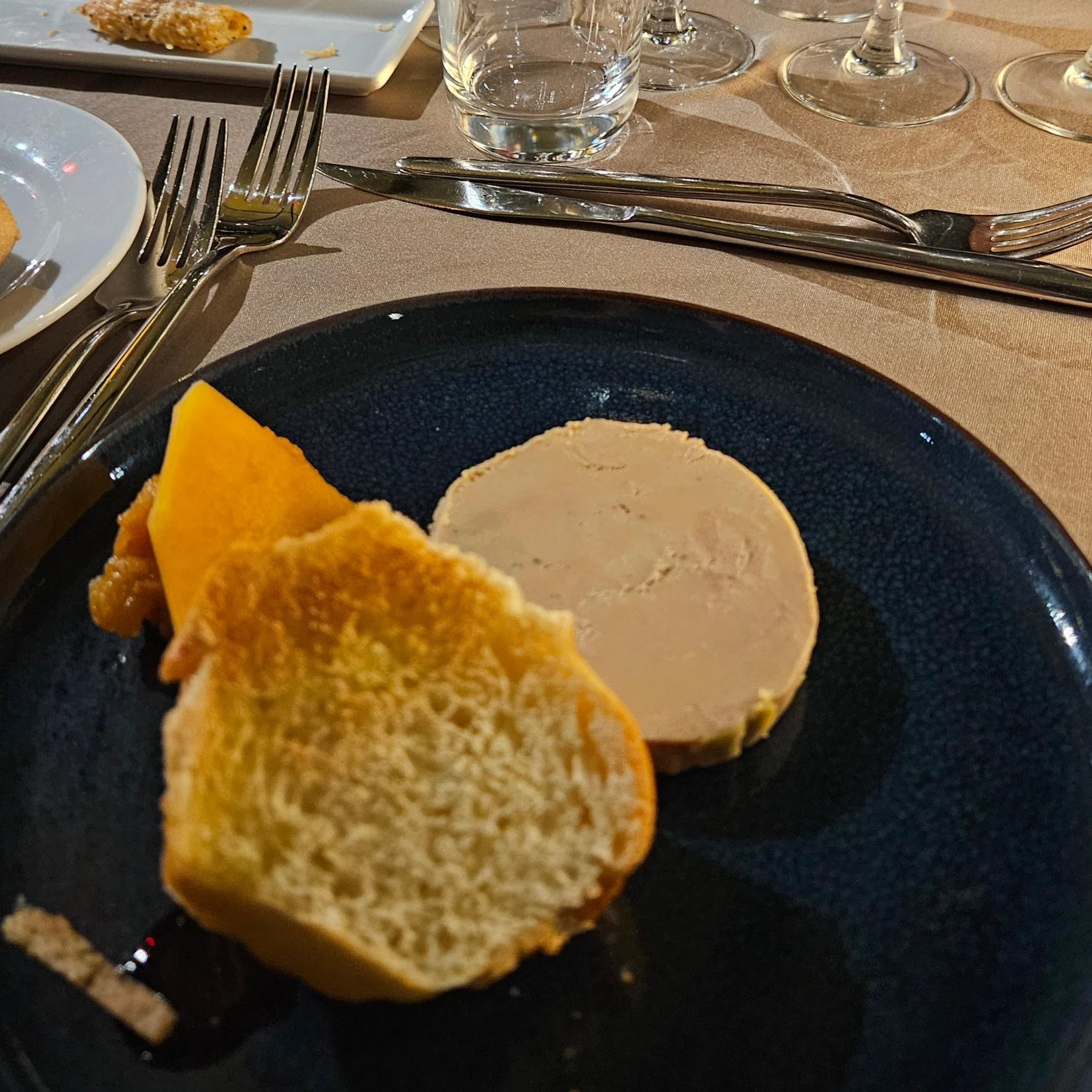
One of the first delicacies I tried in Paris was foie gras.
It is an ingredient surrounded by controversy, yet demand remains deeply anchored in classical French dining. While I’m not an overly sensitive eater, I have an aversion to fishy, oceanic funk, so I was curious whether the richness of foie gras would suit my palate.
My first taste came during our Seine dinner cruise. While there was a faint, distinct meatiness, it was smooth and balanced rather than overwhelming—perhaps because I don’t mind the earthy notes of pork or lamb.
The texture was velvety, creamy, and delicate, carrying an umami profile that distantly reminded me of the savory braised pork liver I ate in my childhood. Given the accessible price point of the river cruise, it likely wasn’t a rare artisanal preparation, but it was surprisingly enjoyable and left me curious to try a top-tier version down the road.
Petrossian Ossetra Caviar
Next came caviar. As someone who avoids pungent seafood flavors, caviar was never something I actively sought out.
Shortly before the trip, however, someone shared a tasting technique with me: instead of chewing it like ordinary food, let the pearls rest on your tongue and gently crush them against the roof of your mouth.
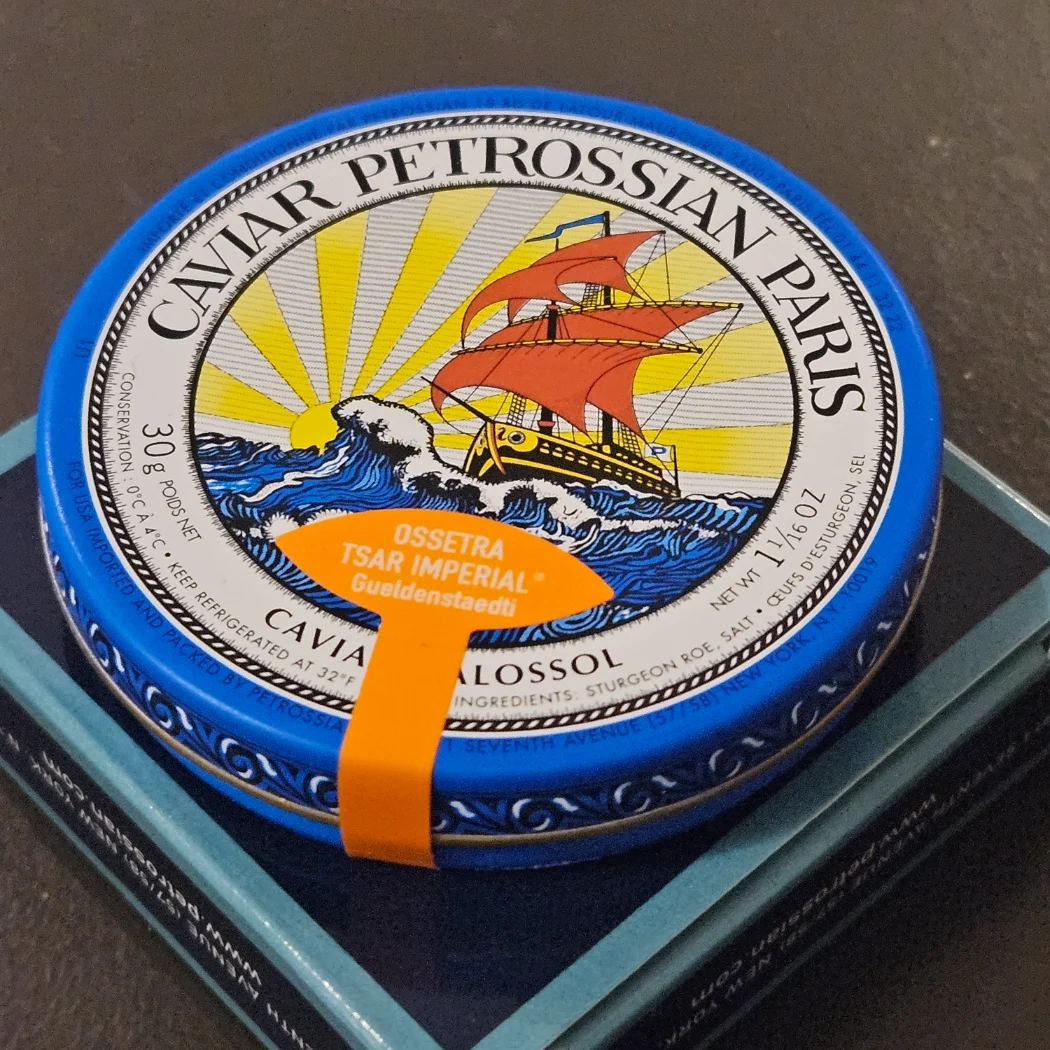
I decided to give high-grade caviar a proper chance and headed to the Petrossian boutique inside Galeries Lafayette Le Gourmet. The counter was lined with prestige tins, spanning all the way up to Beluga. I selected a 30g tin of Caviar Ossetra Tsar Impérial, priced around €90.
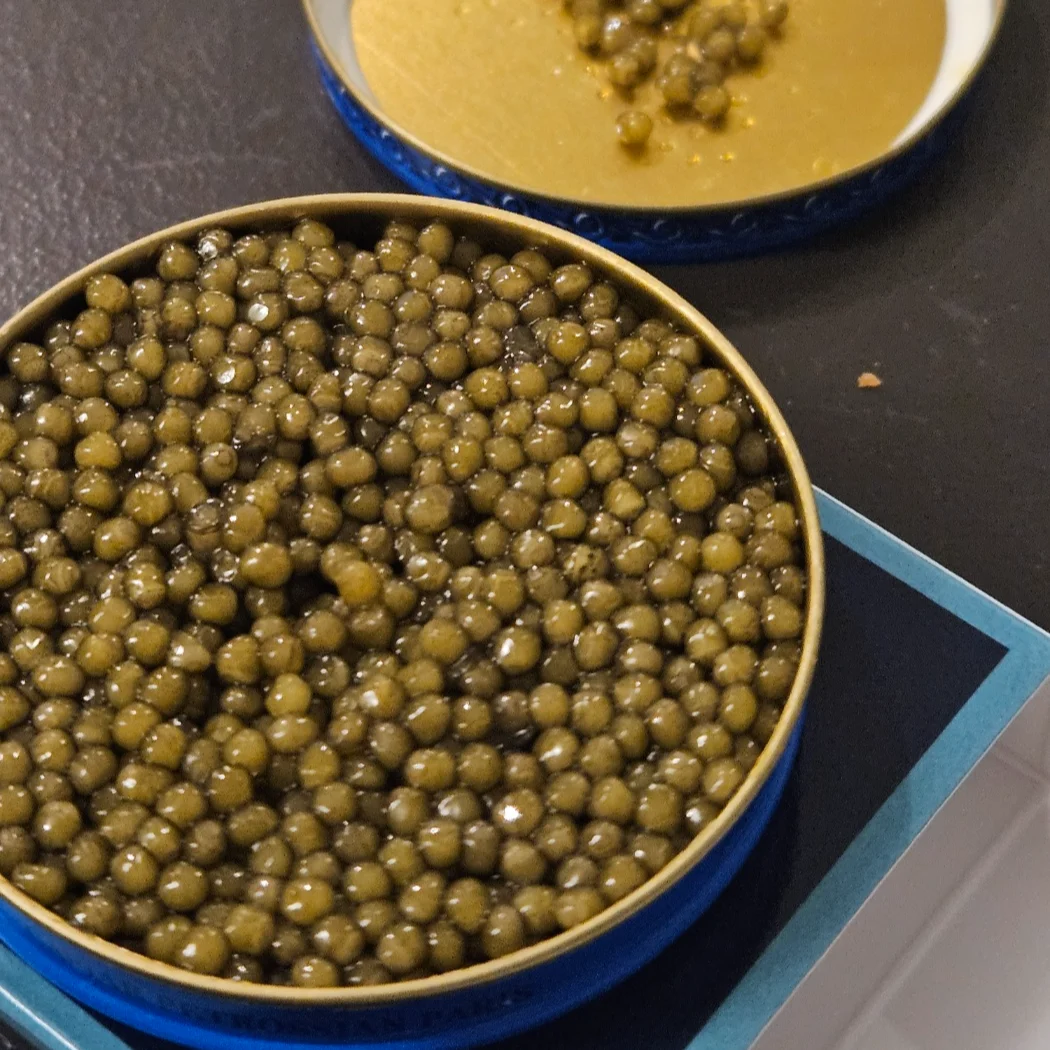
Back in our hotel room, I opened the tin and took a taste using the proper technique. It was leagues ahead of the generic, salty fish roe I had sampled in the past. Crushing the pearls against the palate eliminated any harsh fishiness, releasing an intense, buttery umami with rich oceanic depth—reminiscent of premium crab tomalley, but far cleaner.
I rarely eat crab tomalley because of its brininess, yet this caviar was extraordinary. I don’t know how frequently I’ll be buying tins like that, but the experience firmly etched a new fact into my mind: I genuinely love good caviar.
The Foundation: Baguette and Bordier Butter
No culinary reflection on Paris is complete without baguette and butter.
In France, the price and quality of a baguette is practically a matter of public policy. It remains the everyday fuel of the nation, keeping prices remarkably modest. As a personal rule of thumb, the best way to gauge how deeply a society values a food culture is to judge the quality of its cheapest, most accessible tier. The fact that an ordinary 1-euro baguette from a random corner bakery in Paris delivers a golden, crispy crust with a chewy, fragrant crumb proves how fiercely the French protect their baking craft.
Then there is the butter. French cultured butter holds a global reputation for a reason.
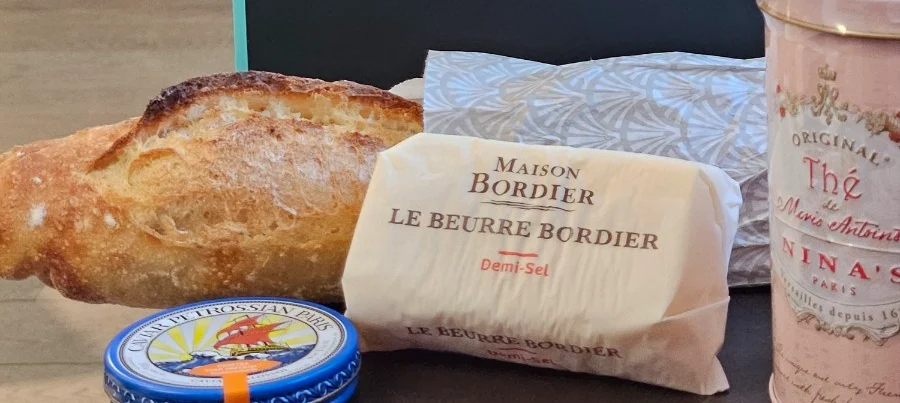
Alongside the caviar, I picked up a fresh traditional baguette and a block of Le Beurre Bordier Demi-Sel (semi-salted butter). Slathering a generous slice of cold, rich Bordier butter onto a warm, crusty piece of bread—where pure cultured dairy fat, flaky sea salt crystals, and sweet toasted wheat melt together—is arguably one of the greatest culinary bites you can experience in Paris. Bordier’s pronounced creaminess and lactic tang isn’t for everyone, but to my palate, it was absolute perfection. If I lived in Paris, having crusty baguette, salted butter, and a strong black coffee would easily become my breakfast three days a week.
The Difference Between “Never” and “Once”
There were plenty of other ingredients I wanted to explore, but limited time and hefty price tags held me back. Fresh whole black and white truffles, for instance, sat behind glass displays at the gourmet food hall priced near €2,000 per kilogram. While synthetic truffle oils have made the scent commonplace, the depth of an authentic, freshly shaved winter truffle is said to be incomparable. (Next time, it might be wiser to simply order a truffle-centric dish at a dedicated bistro rather than buying raw kilograms!). Fine aged jambon, Grand Cru appellation wines, and unpasteurized raw-milk Camemberts and Bries all remain on my future tasting list.
Some might look at spending €90 on a small tin of sturgeon roe or paying a premium for imported butter as an unnecessary indulgence. In some ways, I understand that viewpoint. I’m certainly not wealthy enough to keep caviar stocked in my fridge on an ordinary Tuesday.
Yet the distance between never experiencing something and experiencing it just once is vast.
During my twenties, when international travel was opening up, I scraped together every spare dollar to travel the world, curious to see how different cultures lived. That curiosity broadened my horizons and ultimately shaped my life in the United States today.
In the same vein, while I don’t regularly splurge on luxury delicacies, setting aside a small budget to taste benchmark ingredients expands your sensory baseline. If you find yourself wandering through Paris, I encourage you to seek out at least one exceptional ingredient you’ve never tasted before. The memory of that first proper bite will stay with you long after the trip is over.