Ep. 06 | Come to Me, Aurora: Living the 5% Statistic in Saariselkä
A Guaranteed 95% Probability
A while ago, I read an article explaining that solar activity was set to hit a solar maximum through early 2025 before sliding into a quieter phase. Since the aurora borealis is driven by solar wind, a period of heightened solar flares meant this was the absolute prime window to see the lights.
That article sparked the entire itinerary. Late November—well into peak season—a solar peak, and a trip to Finnish Lapland, where staying three or more nights statistically yields over a 95% chance of catching the aurora. From the moment I began planning to the day we landed in Lapland, seeing the northern lights felt less like a hopeful wish and more like an absolute certainty.
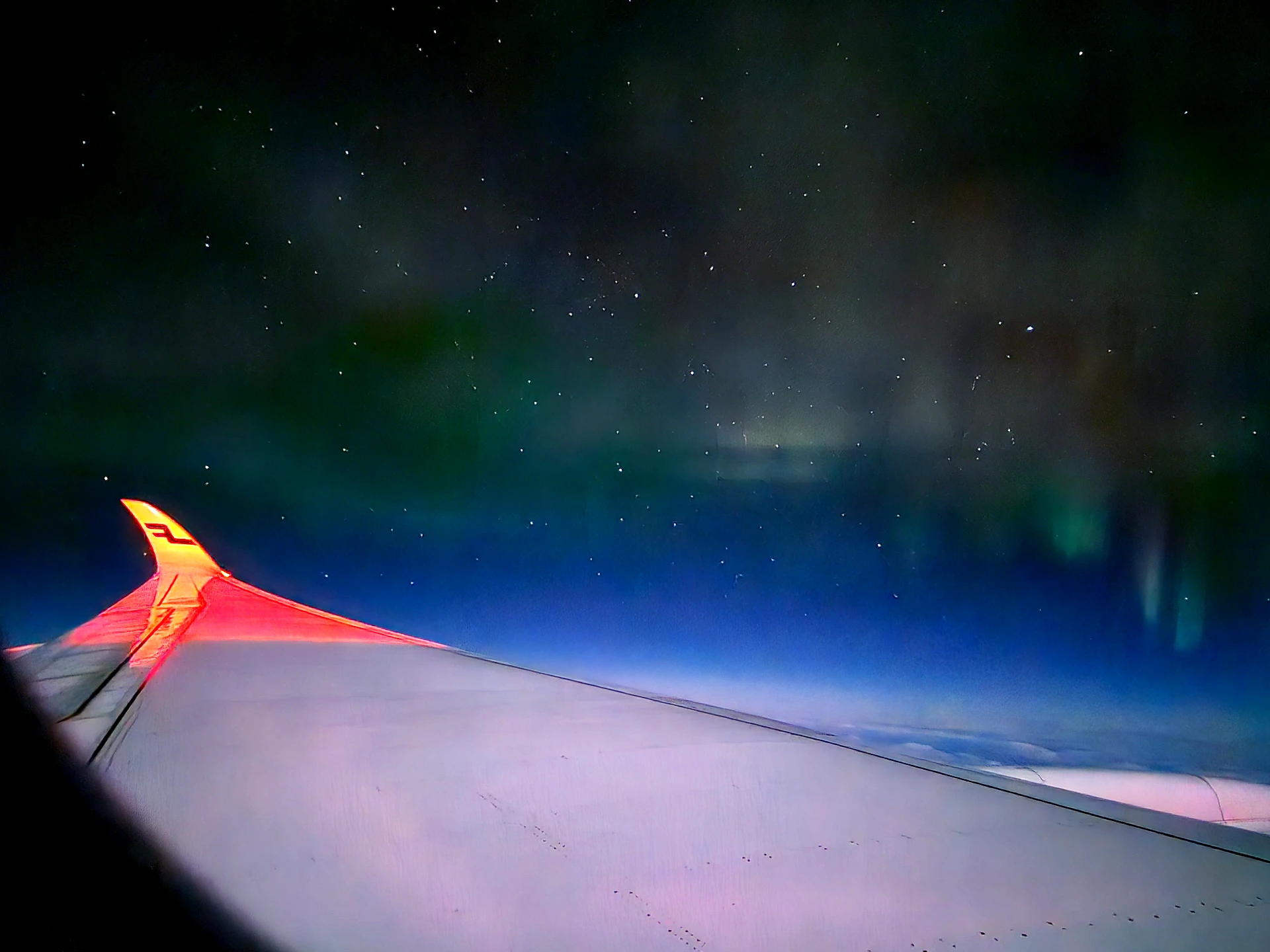
To top it off, I even caught a faint, ghostly glow of the aurora through the cabin window on our flight into Finland. As far as beginnings went, it couldn’t have been more promising.
Apps, Forecasts, and the Absolute Need for Luck
While seeing the northern lights ultimately hinges on pure luck, there are ways to gauge how favorable your odds might be. That starts with checking aurora forecasts.
- NOAA Space Weather Prediction Center: One of the most widely used platforms, though its graphics tend to lean heavily toward Alaska and North America.
- Geophysical Institute at UAF: Offers a simpler, highly intuitive visual forecast for global high-latitude regions.
- Finnish Meteorological Institute (Space Weather in Finland): Since we were traveling through Finnish Lapland, I checked this site most frequently. It provides localized predictions for specific regions across Finland.
- Aurora Webcams & My Aurora Forecast App(App Store): Webcams allow you to view live sky feeds around the world, while smartphone apps track live solar wind data and send real-time push alerts when auroras are detected nearby—a feature many travelers rely on to wake up in the middle of the night.
The catch with all these tools is that they can only offer short-term forecasts—usually 30 minutes to two hours out. You never truly know if the sky will cooperate until the evening arrives.
Ultimately, no matter how many monitors you track, nature holds all the cards. You need two uncontrollable factors to line up simultaneously: a solar storm strong enough to produce visible lights, and a sky entirely clear of clouds.
And Yet, That 5% Odds Played Out
Our first night in Finland was spent in Rovaniemi. While Rovaniemi sits at a latitude where auroras are frequently spotted, our night passed quietly without a trace of light. I wasn’t discouraged; we were heading even further north to Saariselkä the following day.
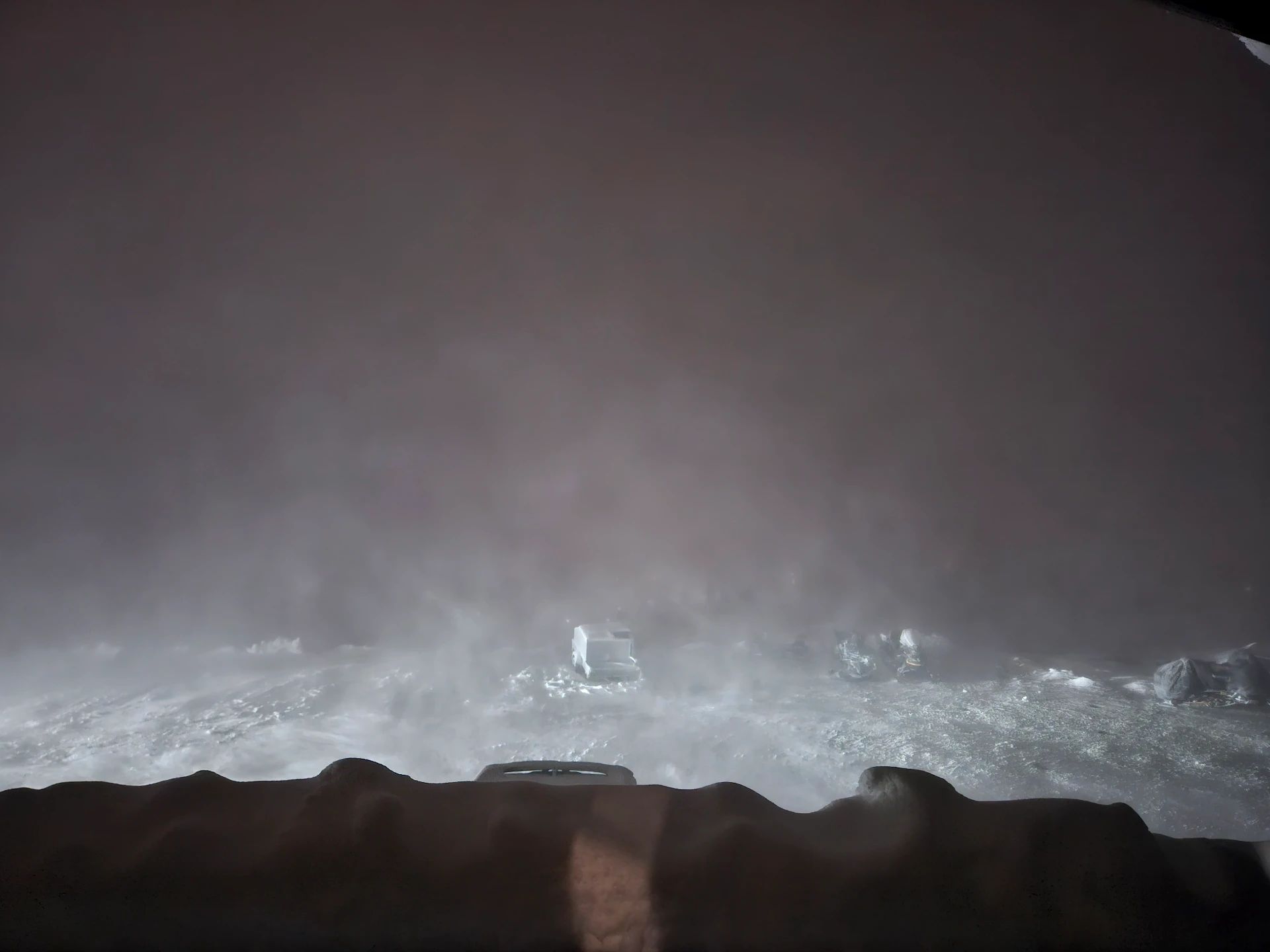
Upon arriving in Saariselkä, however, ominous clouds began rolling over the fells. Sure enough, our second night brought a full-blown snowstorm. Even if a moderate Kp 2 or Kp 3 aurora was dancing above the atmosphere, the thick layer of swirling snow rendered it completely invisible.
Uncertainty began to creep in. Checking the weather forecast on the third morning, the outlook for both that evening and the following night was grim: heavy cloud cover.
On our third night, we set out on an aurora safari, gliding through the wilderness in a timber sled behind a snowmobile. The snowstorm raged on. Even bundled in heavy Arctic overalls, the biting wind seeped through as we huddled inside the goahti around the fire.
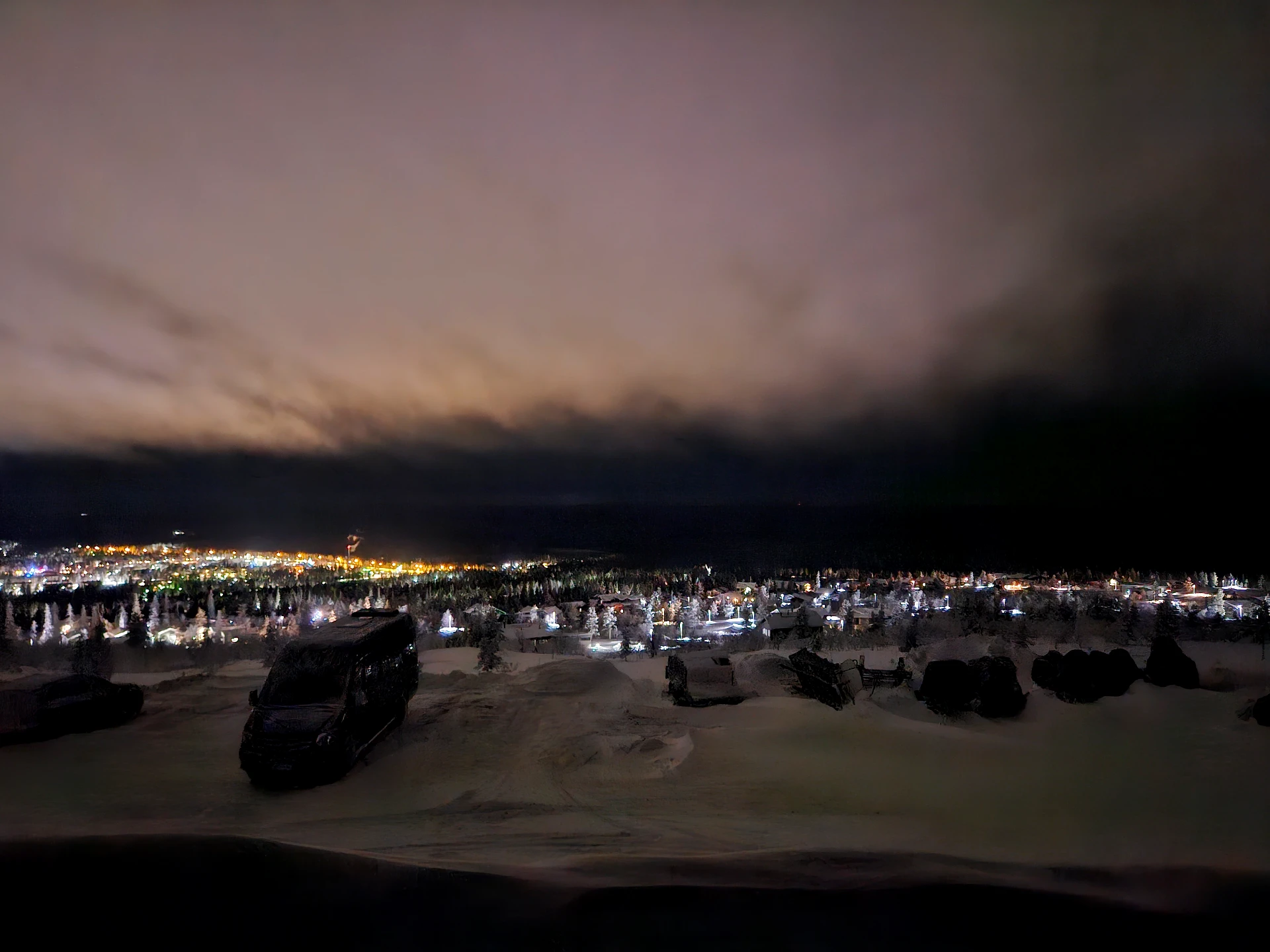
By the fourth morning—our final full day—worry had set in. Forecasts suggested the clouds might thin out slightly by evening, offering a sliver of hope. But as night fell, the thin veil thickened once more. My eyes were playing tricks on me; every camera artifact and lens reflection started looking like a green hue. No snow fell, but a localized bank of clouds sat stubbornly directly over Saariselkä. We could see the clear edge of the cloud bank off in the distance, but it refused to drift closer. Had the aurora been exceptionally intense, it might have burned through the haze, but the sky remained dark.
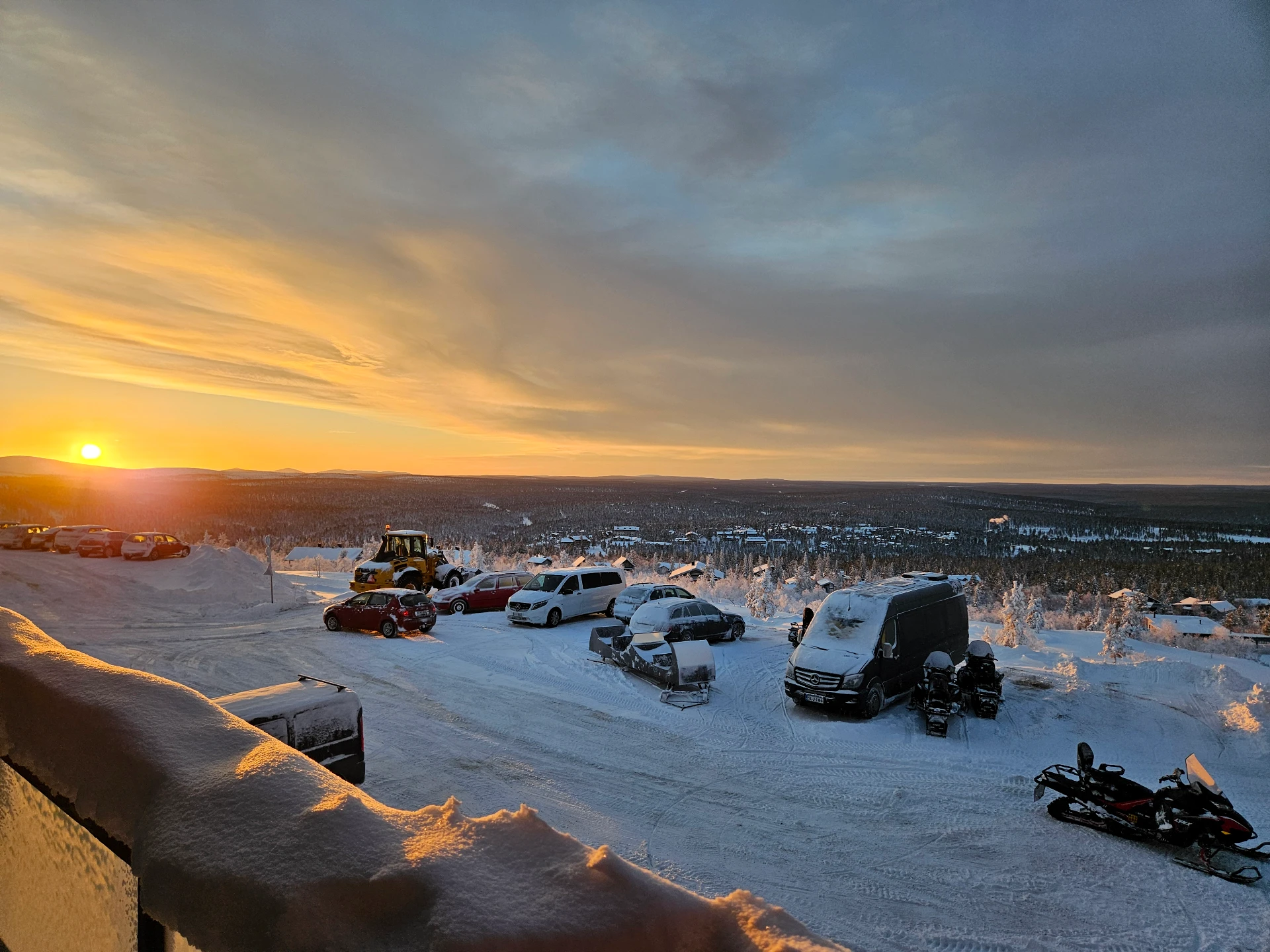
On the fifth morning, as we prepped for departure, the sun rose into a completely cloudless, azure sky. Ironically, it was the very first clear sunrise we had witnessed since arriving in Finland. Against all odds, we had comfortably landed inside that remaining 5% statistic.
Probabilities Are Just Probabilities
I later learned that the very night after we left Saariselkä, the sky erupted with vibrant, dancing auroras. The lights had been active the night before we arrived, and they returned the night after we departed. The exact four-day window we spent in Lapland happened to be the sole stretch of overcast skies and quiet solar activity.
In life, we constantly calculate probabilities, choosing options that seem to offer the highest chance of success. Yet no matter how stacked the odds are, a statistic is still just a statistic—and sometimes, the 5% outlier finds you anyway.
We map out itineraries, make reservations, and prepare down to the smallest detail to eliminate variables, only to be caught completely off guard by elements beyond our control. Yet it is often within those unexpected detours that memorable stories take shape.
We didn’t catch the northern lights on this trip, but we spent over twenty hours of polar darkness having deep conversations, playing games, and building warm memories together. And perhaps most importantly, the missed lights gave us the perfect excuse to plan our return to the far North.